On 28 October 1846, in the village of Villeneuve-Loubet, near Nice, a boy named Georges Auguste Escoffier was born. One hundred and eighty years later, there is hardly a professional kitchen in the world that does not work, every single service, inside the system he built.
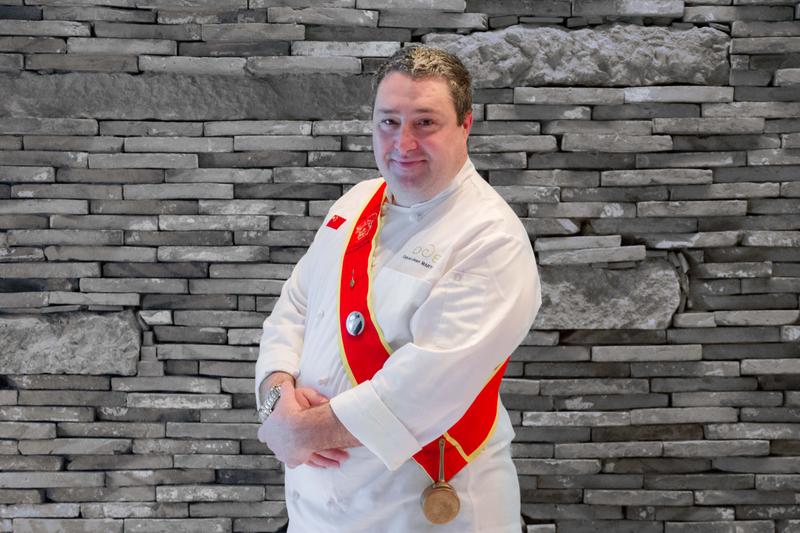
As National Secretary for China of the Disciples Escoffier, it is my privilege to write a few words in his honour on behalf of our delegation. I will try to do it the way he would have wanted: with facts, with respect, and without decoration.
The Boy From Villeneuve-Loubet
Escoffier's training began early and without ceremony. At twelve, his father took him out of school and sent him to work in his uncle's restaurant, Le Restaurant Français, in Nice. At nineteen, in 1865, he went to Paris as commis-rôtisseur at Le Petit Moulin Rouge.
Then came the army. When the Franco-Prussian War broke out in 1870, he served as chef de cuisine of the Army of the Rhine at Metz, feeding men under siege conditions. It was there that he became interested in preserving and canning food, and it was from military life that he took the idea of a kitchen run with order, rank and discipline.
The Man Who Organised the Kitchen

With the hotelier César Ritz, Escoffier changed what a great hotel could be: the Grand Hotel in Monte Carlo from 1884, the Savoy in London from 1890, the Ritz in Paris in 1898, and the Carlton in London from 1899 until he retired in 1920.
But his true monument is not a hotel. It is the brigade de cuisine: every cook with a station, every station with a role, every order called and answered. Before Escoffier, a great kitchen could depend on the genius of one man. After him, it could depend on a system. That is why a young commis in Shanghai, in Jakarta or in Paris today understands the same words at the pass.
In 1903 he published Le Guide Culinaire, written with Philéas Gilbert and Émile Fétu, which fixed thousands of recipes in a form any professional could reproduce. In 1919, at seventy-three, he was made a Knight of the Légion d'honneur, and in 1928 he was raised to Officer. That same year he became the first president of the World Association of Chefs' Societies. He died in Monte Carlo on 12 February 1935, at eighty-eight.
The French press called him "le roi des cuisiniers et le cuisinier des rois," the king of cooks and the cook of kings. The phrase had been said of Carême before him. In Escoffier's case, the work earned it.
Why We Wear the Sash
The Disciples Escoffier were founded in 1954 to keep his legacy alive and to pass it on. Today the association counts several thousand members in more than fifty delegations on five continents. Each of us, when we receive the sash, accepts the same simple duty: to transmit what we were taught to those who come after us.
I have carried that responsibility for the China delegation since 2012. It has taught me something Escoffier understood perfectly: a tradition does not survive by being admired. It survives by being practised, corrected and handed on, one cook at a time, one service at a time.
That is also why his legacy travels so well. Escoffier never cooked in China. Yet the method he left behind, the stocks and mother sauces, the precision of the brigade, the respect for the product, works in any kitchen whose cooks are willing to learn it. In my own career, it is the foundation on which everything else, including my work with the fire of the Chinese wok, has been built.
The 180th Anniversary
To mark the date, the Fondation Auguste Escoffier and the Disciples Escoffier International called on delegations across five continents to gather on the evening of 28 October 2026 for a Dîner d'Épicure, under the patronage of Chef Michel Roth, Meilleur Ouvrier de France and Bocuse d'Or laureate.
The idea itself comes from Escoffier. He created the Dîners d'Épicure in 1912: one menu, served on the same evening in many cities, to celebrate French cuisine around the world. This year's menus were inspired by a Dîner d'Épicure he devised in 1913. More than a century later, his idea still brings cooks together across borders, on the same night, around the same table.
A Toast
To the boy who left school at twelve for a kitchen in Nice. To the cook who fed an army under siege. To the chef who gave every kitchen in the world its order and its language.
On behalf of the Disciples Escoffier in China: à Auguste Escoffier, avec respect et reconnaissance.
The same foundation, classical French technique learned the way Escoffier set it down, runs through every recipe in French Knife, Asian Fire — Volume I: The Wok & The Whisk, where the mother sauces meet the fire of the Chinese wok. Thirty-five recipes written for a real home kitchen. Available now in paperback and on Kindle.
Prefer Kindle? Get the ebook here →
— Chef David Marteau
National Secretary for China, Disciples Escoffier
World Master Chef
Chevalier, Ordre du Mérite Agricole
Sources. Biographical dates for Auguste Escoffier from standard references; Fondation Auguste Escoffier and Disciples Escoffier International, announcement of the "Célébration du 180ᵉ anniversaire du Maître Auguste Escoffier, Dîner d'Épicure, 28 octobre 2026," published in Le Journal des Palaces (July 2026), for the anniversary dinner, the history of the Dîners d'Épicure and the figures on the association. Photographs credited in their captions.
Know someone who would enjoy this story? Send it their way. That is how a small, independent kitchen journal finds its readers. Thank you for reading.
Éditions Marteau is an independent publisher, supported by its readers. Subscribe free to get new stories, recipes and kitchen notes by email, starting with my guide, 10 Techniques.
Thank you. Check your inbox and confirm your email to start receiving the newsletter.